
India's stock markets corrected recently but foreign money is likely to chase China rather than India in the short-to-medium term, said Chris Wood, global head of equity strategy at Jefferies, on Thursday. Wood told the Business Standard Manthan Summit in New Delhi he is bullish about Indian equities from a long-term perspective, but for the short term he is cautious given the quantum of foreign investor (FII) outflows and valuation woes.

'Other sectors that manage the savings pools of Indians are giving tough competition to life insurance companies.'

It won't be an easy ride for the markets, reckon experts, considering the multiple state elections in 2018 and general elections next year.

The 2030 edition carries historic significance, marking 100 years of the Commonwealth Sport Movement, and India's bid positions Ahmedabad as the host city for this centenary edition, the Gujarat government said in a statement.

Among Sensex firms, Asian Paints, Bajaj Finance, Tata Steel, Bajaj Finserv, ICICI Bank, Maruti, Reliance Industries, HDFC Bank and Mahindra & Mahindra declined. Tech Mahindra, Tata Motors, Infosys, HCL Tech, IndusInd Bank and UltraTech Cement were among the gainers.

New investor additions by mutual funds (MFs) have slowed dramatically in recent months, indicating that market correction and a rise in volatility are somewhat dimming the appeal of equity schemes. MFs have onboarded 300,000 new investors in April 2025, the lowest in 22 months.

'The world is heading into a period of serious problems, and gold and silver are among the few ways to protect oneself.'

'As the team builds, each of them will bring in a different perspective, new thinking.'

Foreign Portfolio Investors (FPIs) continued their buying spree and poured close to Rs 4,800 crore in the Indian equity markets in the first week of January driven by confidence in the country's robust economic fundamentals. Additionally, they injected Rs 4,000 crore in the debt market during the period under review, data with the depositories showed. With expectations of a prolonged decline in US interest rates in 2024, there is an anticipation that FPIs will likely escalate their purchase, particularly in the initial months of the New Year leading up to the general elections, V K Vijayakumar, chief investment strategist at Geojit Financial Services, said.

The services sector employs 188 million people but remains highly informal, trapping most workers in low-wage jobs without social protection.
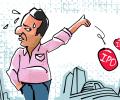
The primary market is set for a busy week as two major companies, Tata Capital Ltd and LG Electronics India Ltd, gear up to launch their initial public offerings (IPOs), collectively worth more than Rs 27,000 crore.

'Success isn't about a single brilliant idea; it's about the relentless execution, the ability to withstand the storms, and the unwavering belief in your mission, even when no one else sees it,' Madhu Lunawat, founder, The Wealth Company.

'When you have the best market at your doorstep, international diversification is a distraction.'

Among Sensex firms, Trent, Power Grid, Tata Motors, Tata Consultancy Services, Asian Paints, NTPC, Adani Ports and Bajaj Finance were the laggards. However, Bharat Electronics, Axis Bank and Bharti Airtel were the major gainers.

It is not yet clear if Diageo Plc is looking to sell its complete stake in RCB.

The report, however, warned of challenges arising from large capital inflows.

Among Sensex shares, Sun Pharmaceutical, Tata Steel, Trent, Bajaj Finance, Mahindra & Mahindra, Bajaj Finserv, Reliance Industries, Axis Bank, Tech Mahindra, Adani Ports, Titan, BEL, and Larsen & Toubro were the major laggards. However, Hindustan Unilever, Maruti Suzuki India, ITC, Tata Consultancy Services and UltraTech Cement were the gainers.

Fundraising by Indian corporates through equity and debt reached all-time high in the calendar year 2024, according to primedatabase.com. The overall public equity fundraising stood at Rs 3.7 trillion in 2024, a rise of 159 per cent from Rs 1.4 trillion in 2023. If Rights Issues of Rs 25,973 crore were to be added, the overall equity fundraising would touch nearly Rs 4 trillion in 2024.

India is among the three least-favoured Asian stock markets, according to BofA Securities whose survey found that 10 per cent of fund managers are underweight on Indian equities from a 12-month perspective.

'Sebi's measures are necessary to align the derivatives market with its underlying cash market, as the current disconnect is unsustainable.'

Part-I of this three-part series dives into Delhi-NCR's SPR, Sohna, Dwarka Expressway, and Jewar Airport leading the charge.

Equity benchmark indices Sensex and Nifty fell on Friday, extending their downward journey to the third day, as investors continued to reel under pressure caused by the imposition of high tariffs and relentless foreign fund outflows.

MFs offer scale, simplicity, liquidity, and tax efficiency, and are an excellent vehicle for disciplined SIP investing. PMS is better suited for larger portfolios with equity allocation of Rs 3 crore to Rs 5 crore.
Among Sensex firms, Tata Motors, Bharat Electronics, UltraTech Cement, Tech Mahindra, Mahindra & Mahindra, ICICI Bank, Tata Consultancy Services and Axis Bank were the major laggards. However, Power Grid, Hindustan Unilever, NTPC and HCL Tech were among the gainers.

The Securities and Exchange Board of India (Sebi) has approved a proposal from a startup to test fractional shares in its innovation sandbox, marking a potential shift in the Indian equity landscape. This represents a change in stance from 2021, when Sebi rejected a similar proposal in the regulatory sandbox, primarily due to concerns over the custody of fractional shares.

Foreign portfolio investors (FPIs) infused Rs 11,630 crore in the Indian equity markets in April on the reasonable valuation of stocks and appreciation in the rupee. This came after FPIs infused a net sum of Rs 7,936 crore in equities in March, mainly driven by bulk investment in the Adani Group companies by the US-based GQG Partners. However, if one adjusts for the investments of GQG in Adani Group, the net flow was negative.

: Build lasting wealth via disciplined, long-term mutual fund investing in India's compounding marathon, Shanaihi, Shanaihi, says Ramalingam Kalirajan

Despite the rally in equities over the last few years, India, according to Christopher Wood, global head of equity strategy at Jefferies, is still in early stages of an equity cult. Any changes to the capital gains tax for equities - both long-term and short-term - in Budget 2024 scheduled to be announced on July 23, he believes, can trigger a bigger correction that what the markets witnessed post the Lok Sabha election outcome on June 4 that saw the Bharatiya Janata Party (BJP) lose majority, though it was able to form the government with the help of coalition partners.
From the Sensex firms, HCL Tech, Infosys, Power Grid, Tata Consultancy Services, HDFC Bank, Hindustan Unilever, Bharti Airtel and ICICI Bank were among the major laggards. However, Titan, Larsen & Toubro, Maruti and Axis Bank were among the gainers.

A deep dive into Trump's new policy and what it means for Indian professionals and companies.

Let's work flat out and create a policy framework that fosters the growth of Indian non-family business VC and private equity firms. This will allow our Indian startups' dreams to flourish, explains Ajit Balakrishnan.

'Indian markets may underperform global peers for the next two quarters.' 'But beyond that, India should catch up and resume its long-term growth path.'

From the Sensex firms, Kotak Mahindra Bank, Eternal, Asian Paints, NTPC, Bharat Electronics Ltd, Adani Ports, Infosys and State Bank of India were among the major gainers. However, Titan tumbled over 6 per cent. Trent, Axis Bank, Maruti and Hindustan Unilever were also among the laggards.

'The heat shield technology for re-entry vehicles was first mastered in DRDO for the Agni missile.' 'This is why the Americans were so opposed to Agni in the 1980s, unlike other missiles -- it was a re-entry vehicle.'

Foreign brokerages remain cautious on the road ahead for the Indian equity markets. Though analysts at Nomura have revised their March 2026 Nifty target to 26,140 levels from the earlier 24,970, but the upside from the current levels is a modest 6 per cent. BofA Securities, on the other hand, has not made any change to its year-end Nifty target.

SP Group chairman Shapoorji Pallonji Mistry on Friday reiterated calls for public listing of Tata Sons to bring transparency, amid infighting among trustees of Tata Trusts which controls a 66 per cent stake in the holding company of the salt-to-software conglomerate. Shapoorji Pallonji family is the single largest minority shareholder with about 18.37 per cent in Tata Sons.

New investors should not allow themselves to fall prey to FOMO and rush headlong into gold.

Investors should avoid making drastic changes to their asset allocation during a market correction.
From the Sensex firms, Bharti Airtel, Tata Motors, Mahindra & Mahindra, Kotak Mahindra Bank, Axis Bank and Reliance Industries were among the laggards. However, NTPC, Titan, Trent, ITC and Bajaj Finserv were the gainers.

Equity benchmark indices are facing massive corrections, with the NSE Nifty declining over 14 per cent from its lifetime high hit in September last year due to several negative triggers like stretched valuations, foreign fund exodus, disappointing quarterly earnings and rising global trade tensions dragging markets lower. The BSE benchmark Sensex hit its record peak of 85,978.25 on September 27 last year, and the Nifty also reached a lifetime high of 26,277.35 on the same day.
